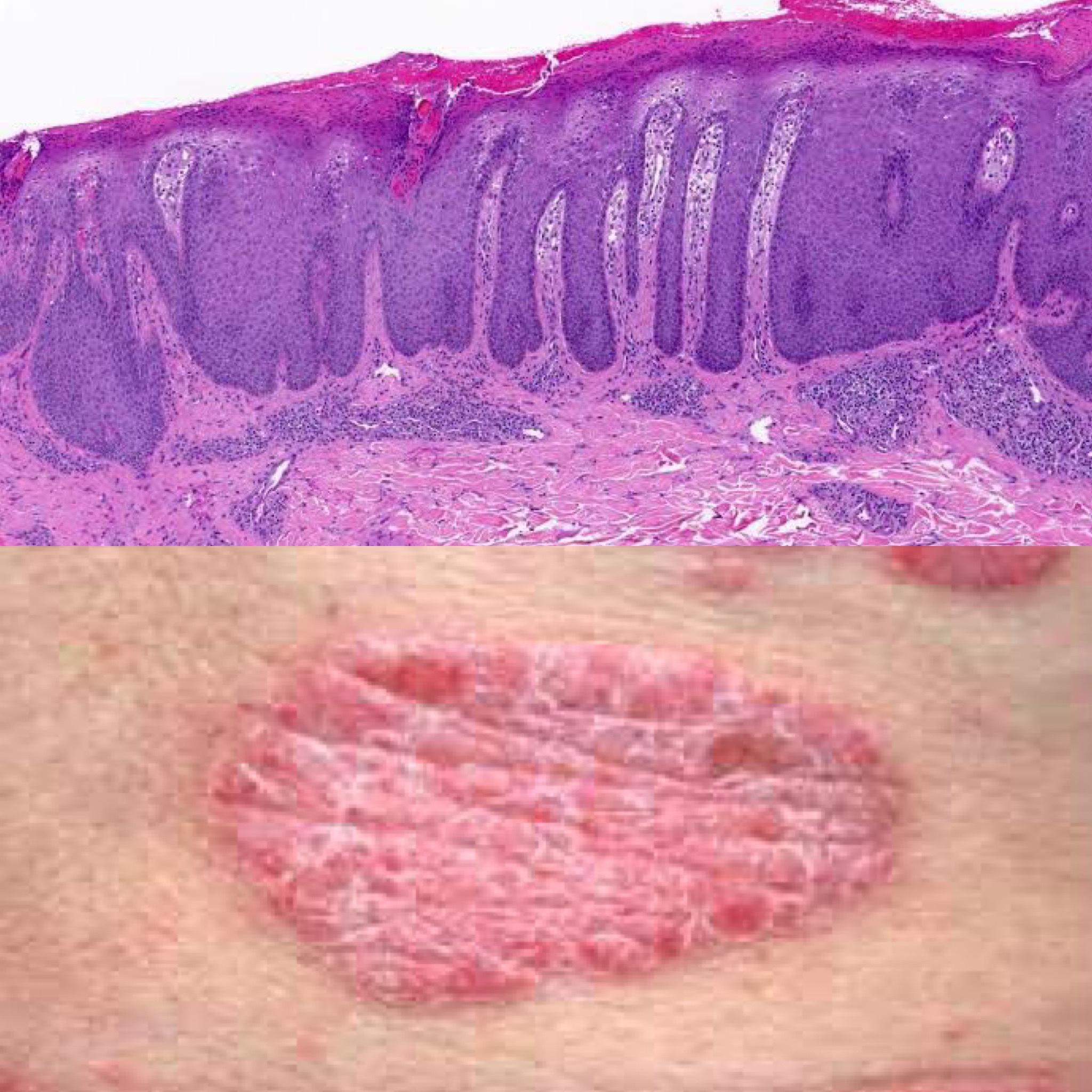
I just got diagnosed with psoriasis. What should I know?
The first thing to know is that the science behind psoriasis has come a long way and is improving every day! While a diagnosis used to feel a bit doomsday-ish, most psoriasis cases are now very well managed and impressive clarity is no longer a rarity. IMPORTANT: this is when it is diagnosed and managed by a dermatologist. Random online tips can be especially damaging because psoriasis is so multifactorial and can be worsened by many things.
Read on for a more detailed understanding of the condition and its care.
What Is Psoriasis?
Psoriasis is an auto-immune condition (frequently genetic) of:
- Recurring, often scaly, thick and red patches in the skin;
- Nail changes, and
- Thick patches in the scalp.
The condition can affect 10% of the body, in mild cases, to 20% or more of the body in severe cases.
Comorbidities include arthritis, diabetes, obesity, hypertension, heart disease, and depression. As unnerving as the skin lesions can be, they are NOT infectious or contagious.
Some triggers
There is a powerful brain-skin connection and stress is a big trigger. People with psoriasis can feel stressed or depressed about their appearance, how they are treated, the daily medications and products they have to spend time on, and the expense of therapy. Learn more here. Relatives, friends, and caregivers need to be educated about the condition to provide a strong support system.
Physical stressors such as infection (e.g. tuberculosis, strep throat, urinary infection, hepatitis), inflammatory foods, allergens in skincare, trauma to the skin, smoking, certain medications, obesity, and alcohol are also common triggers.
Pregnancy can be a trigger or, in some cases, provide some improvement.
How Is Psoriasis Diagnosed?
You cannot diagnose psoriasis on your own. Even experts can confuse psoriasis with other skin conditions like contact dermatitis, atopic dermatitis, dandruff, or even just dry skin.
To properly diagnose and manage psoriasis, dermatologists sometimes order tests such as biopsies, blood work, and a patch test.
Dermatologists use the PASI (Psoriasis Area and Severity Index) to measure the extent and severity of the psoriasis.

How to Treat Psoriasis?
Because psoriasis is multifactorial with many potentially serious comorbidities, it is very important that you do not self medicate. Follow your doctor’s instructions.
Management often involves several things at once, including biologicals. These very targeted medications can be dramatically effective at clearing psoriasis but must be taken with your dermatologist’s close monitoring as regular bloodwork is often required to reduce some possible risks such as immunosuppression.
Prevention (trigger avoidance) is very important in psoriasis.
- Use hypoallergenic products and get a patch test to more accurately identify ingredients you should avoid;
- Lifestyle changes such as working with a nutritionist for a healthier, anti-inflammatory diet (avoid ultra-processed foods);
- Appropriate exercise;
- Adequate sleep (7-8 hours each night);
- Stress management and psychological wellbeing, including possibly working with a therapist or support group.
- Some studies show that GLP-1s may be helpful — ask your prescribing doctor and dermatologist if it could be right for you.
Each patient is unique and each person’s psoriasis is unique. Successful treatment — even as high as PASI 90-100 — can be achieved but is more likely when caring for the entirety of the patient, from preventive care to allergen avoidance, nutrition and mental health, monitoring inflammatory markers, managing comorbidities like diabetes and arthritis, etc.
Important Information On Topical Steroids
A topical steroid is sometimes prescribed to help quickly bring down the inflammation of a flare. Some that are typically prescribed include clobetasol propionate ointment, betamethasone dipropionate ointment, and mometasone furoate lotion.
If you are prescribed a topical steroid, your doctor will give you clear instructions on how to apply it and for how long to use it (normally just a few days to up to two weeks). It is very important that you follow your doctor’s instructions. Specifically, it is very important not to use topical steroids more frequently or for longer than what your doctor prescribes.
Because relief can be so dramatic with a topical steroid, some people continue to use it after the prescribed amount of time and reach for it again and again with every new flare. Some even develop a dependence on it and use the topical steroid daily for years, almost like a moisturizer. Prolonged use has several risks, among them:
- Steroid acne;
- An additional contact allergy — several topical steroids are common contact allergens (and contact dermatitis tends to coexist with psoriasis);
- Tachyphylaxis: the more you use a topical steroid the less effective it becomes so that you need more and more of the medication to try to achieve the original results. This encourages even more over-use;
- Thinning of the skin, leading to heightened sensitivity to more ingredients;
- Barrier defect, which can be welcoming to opportunistic microbes and a secondary infection that can complicate therapy;
- Steroid Withdrawal Syndrome and a rebound effect: when finally taken off of steroids after consistent use, patients may experience a flare-up that can be even more severe than their worst episode prior to steroids (some severe cases require hospitalization); and
- Debilitating and possibly fatal conditions like adrenal insufficiency and Cushing’s Syndrome.
- The risk is higher with higher-potency corticosteroids, occluding the application area (applying the steroid and covering it with a bandage, which increases absorbency), applying the steroid in covered or striae-prone areas like the groin or underarms, using topical steroids while also using oral or high-dose inhaled steroids, and for children due to their higher surface area-to-volume ratio.
- Oral steroids can trigger pustular psoriasis.
“Skin” Summary
- Do not self diagnose.
- Have your psoriasis managed by a specialist — they may need to monitor some lab work regularly and tend to have access to the best, newest treatment options.
- Limit your steroid use to severe emergencies, as prescribed by your doctor. Follow your doctor’s instructions carefully. Topical steroids are not for long-term use.
- Ask about a patch test and be mindful about avoiding your particular allergens in everything from hair and body cleanser, conditioner, facial cleanser, to daily moisturizers, virgin coconut oil, makeup … even clothing and digital accessories!
- Curious about top contact allergens? Click our Allergen-Not-An-Allergen tab and explore.
- Consider layering moisturizers for more intensive barrier care: Creammmy-Rich Intensive Moisturizer followed by Know-It-Oil or Oil’s Well (pure virgin coconut oil) then Boo-Boo Balm.
- Prioritize a healthy lifestyle: lessen inflammatory and junk foods, eat anti-inflammatory foods (the Mediterranean Diet is generally a good guide but check with your doctor), exercise appropriately, get 7-8 hours of sleep a night, and prioritize your mental health.
Psoriasis groups exist all over the world and are great sources of assistance for treatment recommendations and subsidies as well as emotional support and even psoriasis-friendly career searches. A great place to start: the International Federation of Psoriasis Associations.
Want more helpful information? Check out this livestream on psoriasis with our resource expert, a dermatologist and dermatopathologist who is a leading expert on the condition: https://s.myvmv.com/PsoriasisLiveVideo.

Laura is our “dew”-good CEO at VMV Hypoallergenics and eldest daughter of VMV’s founding dermatologist-dermatopathologist. She has two children, Madison and Gavin, and works at VMV with her sister CC and husband Juan Pablo (Madison and Gavin frequently volunteer their “usage testing” services). In addition to saving the world’s skin, Laura is passionate about health, inclusion, cultural theory, human rights, happiness, and spreading goodness (like a VMV cream!)