Not An Allergen
Witch Hazel
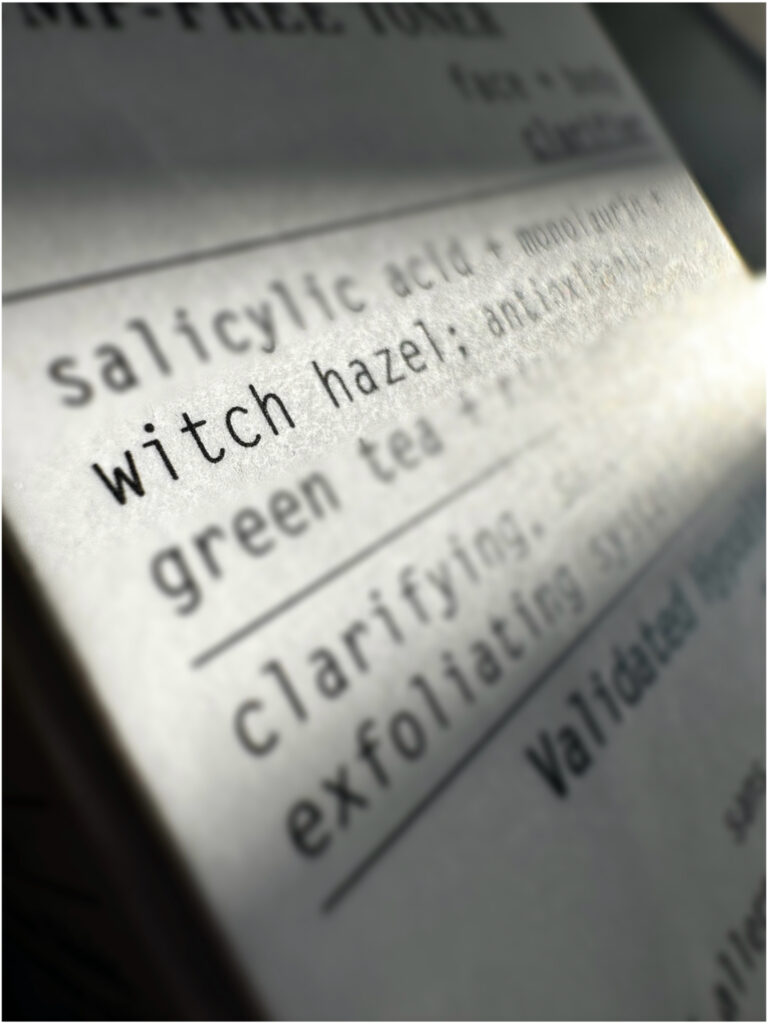
Anything can become a contact allergen, especially the more commonplace it is. This makes it even more impressive that witch hazel (Hamamelis virginiana) is not published as a top contact allergen and has hardly any reports of contact dermatitis to it even after having been in regular use as a plant remedy in diverse indigenous cultures for centuries and in several modern commercially marketed toiletries and medications.
It has remained popular as an over-the-counter treatment for conditions as varied as acne, photo-aging, skin irritation/rashes, flaking scalp, infection, inflammation, vaginal irritation, sunburn, and hemorrhoids. It is also used in products to lessen sebum (oil) production and cleanse the skin, and in oral care products.
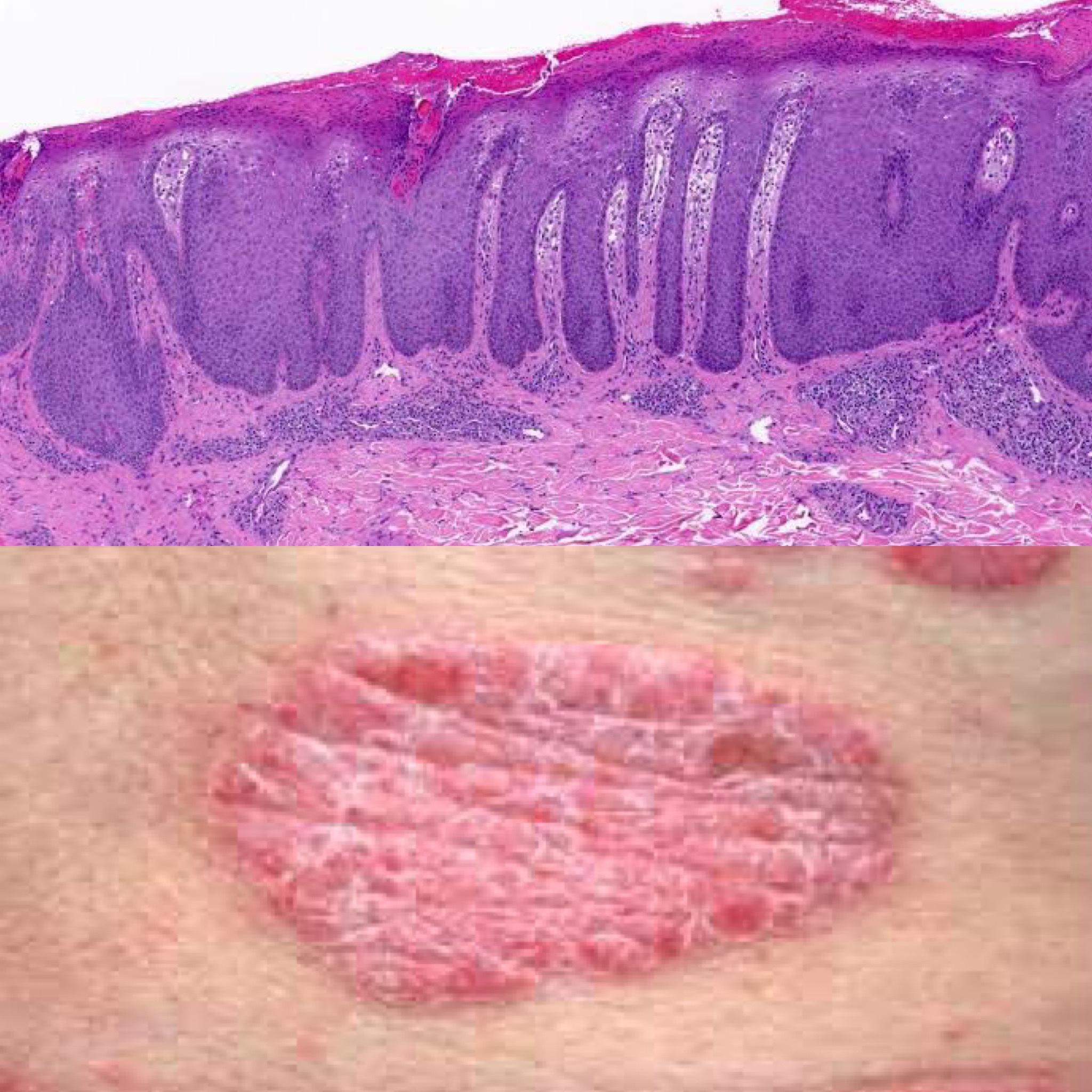
More evidence-based studies are needed to conclusively gauge its efficacy for these claims, but this review of studies from 1990 to 2025 seems to indicate the potential efficacy of witch hazel as an antioxidant, antimicrobial (even against resistant bacterial strains), and as a treatment for wound healing, acne, sensitive scalp conditions, and inflammatory skin conditions like eczema and psoriasis.
It is important to remember that you could be allergic to something that is not a top contact allergen. Get a patch test to make sure you’re avoiding what you are sensitive to, whether it’s an allergen or not.
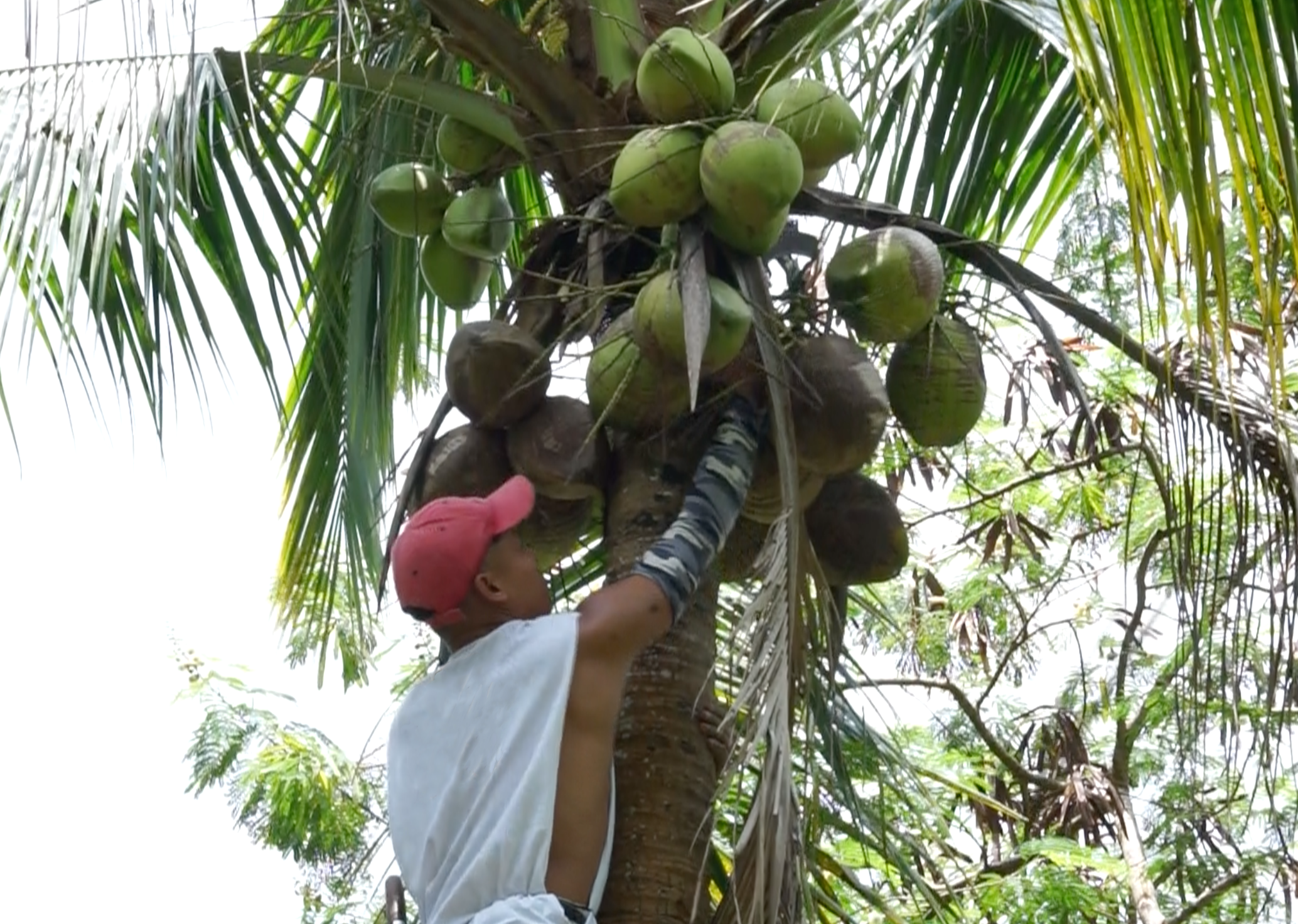
And be on the lookout for other allergens in a formulation that contains witch hazel, even if it’s in a “natural” product. Many natural substances are proven contact allergens, enough so that a study in the Journal of Drugs in Dermatology states, “We emphasize the misconception of clean, natural, organic, and vegan to equal safe … Many naturally derived ingredients are the cause of dermatitis.” There are natural ingredients that are not allergens (like virgin coconut oil, witch hazel is a great example) but it is best to opt for validated hypoallergenic and to refer to your patch test results when selecting products.
Subscribe to VMVinSKIN.com and our YouTube channel for more hypoallergenic tips and helpful “skinformation”!
If you have a history of sensitive skin…
…don’t guess! Random trial and error can cause more damage. Ask your dermatologist about a patch test.
To shop our selection of hypoallergenic products, visit vmvhypoallergenics.com. Need help? Ask us in the comments section below, or for more privacy (such as when asking us to customize recommendations for you based on your patch test results) contact us by email, or drop us a private message on Facebook.
For more:
- On the prevalence of skin allergies, see Skin Allergies Are More Common Than Ever.
- For the difference between irritant and allergic reactions, see It’s Complicated: Allergic Versus Irritant Reaction.
- For the difference between food, skin, and other types of reactions: see Skin & Food Allergies Are Not The Same Thing.
- On the differences between hypoallergenic, natural, and organic, check out Is Natural Hypoallergenic? and this video in our YouTube channel.
- To learn about the VH-Rating System and hypoallergenicity: What Is The Validated Hypoallergenic Rating System?
Main References:
Regularly published reports on the most common allergens by the North American Contact Dermatitis Group and European Surveillance System on Contact Allergies (based on over 28,000 patch test results, combined), plus other studies. Remember, we are all individuals — just because an ingredient is not on the most common allergen lists does not mean you cannot be sensitive to it, or that it will not become an allergen. These references, being based on so many patch test results, are a good basis but it is always best to get a patch test yourself.
- Wójciak M, Pacuła W, et al. Hamamelis virginiana L. in Skin Care: A Review of Its Pharmacological Properties and Cosmetological Applications. Molecules. 2025 Jun 26;30(13):2744. doi: 10.3390/molecules30132744. PMID: 40649262; PMCID: PMC12250947.
- Gangemi, S, Minciullo, PL, et al. (2015), Contact dermatitis as an adverse reaction to some topically used European herbal medicinal products – Part 2: Echinacea purpurea–Lavandula angustifolia. Contact Dermatitis, 72: 193-205. https://doi.org/10.1111/cod.12328
- Urban K, Giesey R, et al. A Guide to Informed Skincare: The Meaning of Clean, Natural, Organic, Vegan, and Cruelty-Free. J Drugs Dermatol. 2022 Sep 1;21(9):1012-1013.
- Houle M-C, DeKoven JG, et al. North American Contact Dermatitis Group Patch Test Results: 2021–2022. Dermatitis®. 2025;36(5):464-476. doi:10.1089/derm.2024.0474
- Urban K, Giesey R, et al. A Guide to Informed Skincare: The Meaning of Clean, Natural, Organic, Vegan, and Cruelty-Free. J Drugs Dermatol. 2022 Sep 1;21(9):1012-1013.
- DeKoven JG, Warshaw EM, Reeder MJ, Atwater AR, Silverberg JI, Belsito DV, Sasseville D, Zug KA, Taylor JS, Pratt MD, Maibach HI, Fowler JF Jr, Adler BL, Houle MC, Mowad CM, Botto N, Yu J, Dunnick CA. North American Contact Dermatitis Group Patch Test Results: 2019-2020. Dermatitis. 2023 Mar-Apr;34(2):90-104. doi: 10.1089/derm.2022.29017.jdk. Epub 2023 Jan 19. PMID: 36917520.
- Uter W, Wilkinson SM, Aerts O, Bauer A, Borrego L, Brans R, Buhl T, Dickel H, Dugonik A, Filon FL, Garcìa PM, Giménez-Arnau A, Patruno C, Pesonen M, Pónyai G, Rustemeyer T, Schubert S, Schuttelaar MA, Simon D, Stingeni L, Valiukevičienė S, Weisshaar E, Werfel T, Gonçalo M; ESSCA and EBS ESCD working groups, and the GEIDAC. Patch test results with the European baseline series, 2019/20-Joint European results of the ESSCA and the EBS working groups of the ESCD, and the GEIDAC. Contact Dermatitis. 2022 Oct;87(4):343-355. doi: 10.1111/cod.14170. Epub 2022 Jun 24. PMID: 35678309. https://pubmed.ncbi.nlm.nih.gov/35678309/
- DeKoven JG, Silverberg JI, Warshaw EM, Atwater AR, et al. North American Contact Dermatitis Group Patch Test Results: 2017-2018. Dermatitis. 2021 Mar-Apr 01;32(2):111-123.
- DeKoven JG, Warshaw EM, Zug KA, et al. North American Contact Dermatitis Group Patch Test Results: 2015-2016. Dermatitis. 2018 Nov/Dec;29(6):297-309.
- DeKoven JG, Warshaw EM, Belsito DV, et al. North American Contact Dermatitis Group Patch Test Results 2013-2014. Dermatitis. 2017 Jan/Feb;28(1):33-46.
- Warshaw, E.M., Maibach, H.I., Taylor, J.S., et al. North American contact dermatitis group patch test results: 2011-2012. Dermatitis. 2015; 26: 49-59.
- W Uter et al. The European Baseline Series in 10 European Countries, 2005/2006–Results of the European Surveillance System on Contact Allergies (ESSCA). Contact Dermatitis 61 (1), 31-38.7 2009.
- Wetter, DA et al. Results of patch testing to personal care product allergens in a standard series and a supplemental cosmetic series: An analysis of 945 patients from the Mayo Clinic Contact Dermatitis Group, 2000-2007. J Am Acad Dermatol. 2010 Nov;63(5):789-98.
- Warshaw EM, Buonomo M, DeKoven JG, et al. Importance of Supplemental Patch Testing Beyond a Screening Series for Patients With Dermatitis: The North American Contact Dermatitis Group Experience. JAMA Dermatol. 2021 Dec 1;157(12):1456-1465.
- Verallo-Rowell VM. The validated hypoallergenic cosmetics rating system: its 30-year evolution and effect on the prevalence of cosmetic reactions. Dermatitis 2011 Apr; 22(2):80-97.
- Ruby Pawankar et al. World Health Organization. White Book on Allergy 2011-2012 Executive Summary.
- Misery L et al. Sensitive skin in the American population: prevalence, clinical data, and role of the dermatologist. Int J Dermatol. 2011 Aug;50(8):961-7.
- Warshaw EM1, Maibach HI, Taylor JS, Sasseville D, DeKoven JG, Zirwas MJ, Fransway AF, Mathias CG, Zug KA, DeLeo VA, Fowler JF Jr, Marks JG, Pratt MD, Storrs FJ, Belsito DV. North American contact dermatitis group patch test results: 2011-2012.Dermatitis. 2015 Jan-Feb;26(1):49-59.
- Warshaw, E et al. Allergic patch test reactions associated with cosmetics: Retrospective analysis of cross-sectional data from the North American Contact Dermatitis Group, 2001-2004. J AmAcadDermatol 2009;60:23-38.
- Marks JG, Belsito DV, DeLeo VA, et al. North American Contact Dermatitis Group patch-test results, 1998 to 2000. Am J Contact Dermat. 2003;14(2):59-62.
- Warshaw EM, Belsito DV, Taylor JS, et al. North American Contact Dermatitis Group patch test results: 2009 to 2010. Dermatitis. 2013;24(2):50-99.
- Verallo-Rowell V. M, Katalbas S.S. & Pangasinan J. P. Natural (Mineral, Vegetable, Coconut, Essential) Oils and Contact Dermatitis. Curr Allergy Asthma Rep 16,51 (2016) . https://doi.org/10.1007/s11882-016-0630-9.
- de Groot AC. Monographs in Contact Allergy, Volume II – Fragrances and Essential Oils. Boca Raton, FL: CRC Press Taylor & Francis Group; 2019.
- De Groot AC. Monographs in Contact Allergy Volume I. Non-Fragrance Allergens in Cosmetics (Part I and Part 2). Boca Raton, Fl, USA: CRC Press Taylor and Francis Group, 2018.
- Zhu TH, Suresh R, Warshaw E, et al. The Medical Necessity of Comprehensive Patch Testing. Dermatitis. 2018 May/Jun;29(3):107-111.
Want more great information on contact dermatitis? Check out the American Contact Dermatitis Society, Dermnet New Zealand, the Contact Dermatitis Institute, and your country’s contact dermatitis association.

Laura is our “dew”-good CEO at VMV Hypoallergenics and eldest daughter of VMV’s founding dermatologist-dermatopathologist. She has two children, Madison and Gavin, and works at VMV with her family and VMV’s signature “skinfatuated, skintellectual, skingenious” team. In addition to saving the world’s skin, Laura is passionate about health, cultural theory, human rights, happiness, and spreading goodness (like a VMV cream)!