Allergen
Household, Floor, Furniture, Window, Surface Cleaners and Polishers
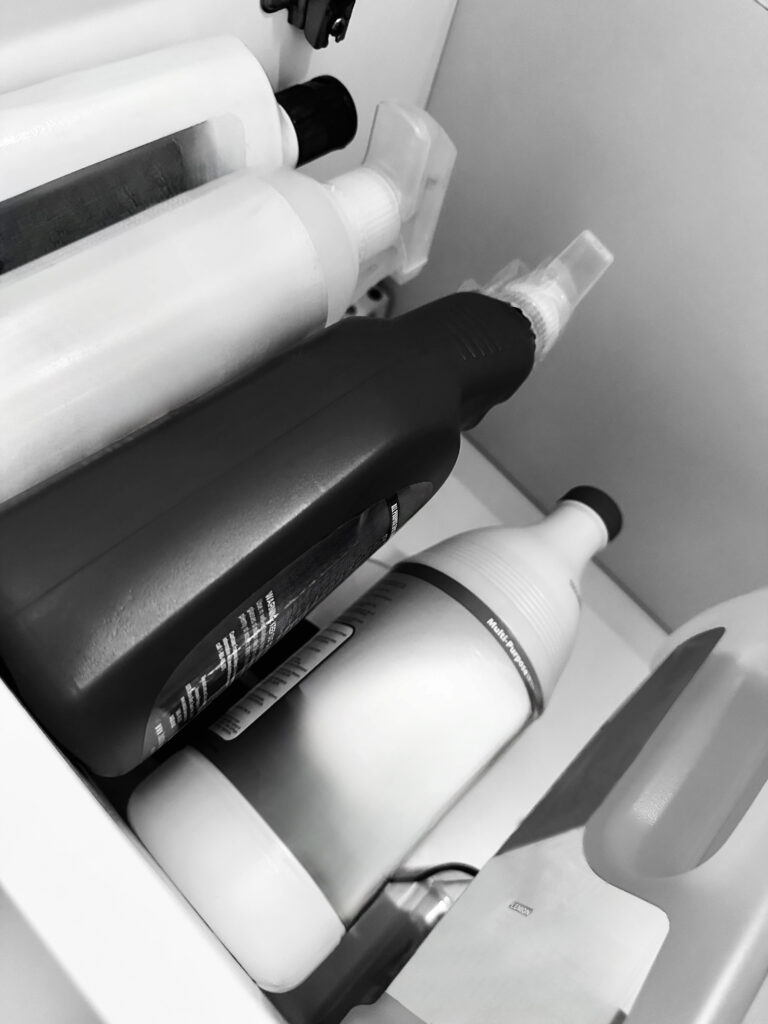
We need to clean our homes but many household cleaning and polishing solutions contain several ingredients that can cause both irritant and allergic skin reactions. Frequent disinfection can also lead to other skin problems besides allergic contact dermatitis (more on this below).
Top contact allergens
Ingredients that are published as top skin allergens that tend to be present in household cleaning products include:
- Antimicrobials that are allergens, such as formaldehyde releasers
- Benzisothiazolinone, Methylisothiazolinone, other isothiazolinones
- Cocamidopropyl betaine or other amido-amine surfactants
- Dyes
- Fragrances
- Preservatives
Common Irritants
These ingredients might not currently be top contact allergens but they frequently cause irritations (some quite severe):
- Ammonia
- Bleach
- Chlorine
- Detergents
- Hydrochloric Acid
- Wet work (lots of exposure to or immersion in water)
Irritant reactions are not true allergic skin reactions. They tend to improve or disappear when you stop or lessen exposure to the substance. After the reaction has subsided, you can normally be exposed to the substance again (provided the exposure is less) without a problem.
Note that some of the irritants that can be found in common household cleaning products are powerful irritants and can cause chemical burns as well as other health issues. For example, when inhaled, bleach can irritate the mucosa to produce upper respiratory problems, rhinitis-related problems, asthma, and a recurring sore throat. IMPORTANT: bleaches can be caustic, highly irritating, or even toxic. Sodium hypochlorite can react with many things — when exposed to sunlight, it can produce the lung irritant chlorine gas and exposure to ammonia can produce toxic chloramines.
Other skin issues from household cleaning products
These products can cause skin problems besides allergic or irritant skin reactions. As mentioned above, many bleaches contain caustic ingredients that can cause burns. These and other products can also cause contact urticaria which, while less common, can be more difficult to treat. Other common skin issues include …
Microbiome Imbalance, Barrier Disruption, Infections
If you happen to disinfect your home frequently (such as cleaning with bleach several times a week), or if you work in professional cleaning (especially if you do a lot of wet work), you risk damaging your skin’s important barrier and/or causing an imbalance in your skin’s natural microbiome. This can lead to:
- An increase in skin problems related to microbiome imbalance
- Yeast, bacterial, and other infections of the skin and nails, which can make clearing the underlying skin irritation especially difficult
- Excessive skin dryness — this can also make you more prone to infections as opportunistic microbes enter cracks in the skin
Remember that skin (as with our other organs) has a natural, healthy population of microbes that coexist in a delicate balance. Basic disinfection is necessary to reduce the risk of a harmful infection but too much disinfection can also be risky. It can throw off the balance of our microbiome by killing off microbes that keep other microbes controlled.
More serious infections can occur when opportunistic bugs in the environment find themselves unchallenged because we’ve decimated important natural microbes that would normally protect us against them.
Hyperpigmentations
Both bleach and chlorine are powerful photo-allergens. When exposed to sunlight or even indoor lights (from lamps as well as your TV, phone, tablet, or computer screen) they can cause dark spots and large dark patches. This is why some individuals who work in or around pools or in professional cleaning develop dark patches and blotches on the face and/or other areas of exposed skin.
These ingredients are such powerful photo-allergens that dark blotches can occur simply from airborne exposure, without direct contact with skin.
Fragrances (including those from essential oils), dyes, and preservatives are also common photo-allergens.
Are natural household cleaning products better?
That depends. Many natural, organic, “clean,” or “vegan” household cleaning products could also have published top skin allergens, most typically essential oils or flower, fruit, or plant extracts like eucalyptus, lavender, ylang-ylang, chamomile, lemon, orange or other citruses, limonene, linalool, mint, etc.
Note that many natural substances are proven contact allergens, enough so that a study in the Journal of Drugs in Dermatology states, “We emphasize the misconception of clean, natural, organic, and vegan to equal safe … Many naturally derived ingredients are the cause of dermatitis.” Opt for validated hypoallergenic and use your patch test results to guide you.
What can I use to clean my home instead?
Try any of our body washes, really diluted in water and poured into a spray bottle. Other mixtures like vinegar and water or baking soda and water are also good options.
There are many recipes for household cleaning solutions that you can find online like this one from Homesteading Family:
- Mix equal parts baking soda and salt or rock salt to make a cleaning, scrubbing powder. Store in a mason jar or similar container that keeps out humidity.
- When ready to use, pour some of your powder onto the surface to be cleaned. Spray some water or white vinegar to make a paste.
- Wipe, scrub, or mop as needed.
- Rinse well with water or a damp mop or washcloth.
Other recipes may add soda water, oil (our coconut oil may work for some surfaces), or other ingredients. Just be cautious about DIY recipes that include irritants or allergens like borax and lemon juice. experiment to see which works best for your needs and make sure to be guided by your patch test results.
How to keep my skin healthy while cleaning?
- Get a patch test. It can be difficult to clear skin issues and prevent their recurrence without knowing what’s really causing them. A patch test can help identify what you, in particular, are sensitive to, which can better guide you.
- Make some adjustments to home cleaning:
- Take a step back and review if you really need that much disinfection in your home. Perhaps you can reduce the days when you use disinfectants and harsher chemicals.
- Try Superwash or any of our body washes instead: as little as a tablespoon (or even less) in a large spray bottle is surprisingly effective. Other tried and true home remedies like vinegar and water or baking soda and water are also excellent options (see above).
- Reduce allergen and irritant exposure elsewhere as much as you can:
- Use shampoo-body wash, conditioner, skincare, and makeup with zero contact allergens and irritants.
- Wash hands with any of our soaps, body washes, or even our facial cleansers.
- Use our allergen-free moisturizers liberally on hands every day and even multiple times during the day. Keep one on you for frequent reapplications.
- For very irritated hands, try this overnight layering intensive moisturization technique: apply moisturizer liberally all over hands. Follow with Know-It-Oil virgin coconut oil then Boo-Boo Balm. Wrap in cling wrap or pure, organic cotton cloth or socks (Cottonique makes some) and leave on overnight.
- For and disinfection throughout the day, try using Kid Gloves Hand Gel or Id Monolaurin Gel. Both of which are allergen-free (and can do double duty to help clear face and body bumps)
- When on the job:
- Use protective gloves (make sure they’re of a material and color that you are not sensitive to; your patch test can guide you).
- Applying a purely mineral, non-comedogenic barrier-protective product like Stay-On-Point! (or Armada Baby or Post-Procedure) or Boo-Boo Balm on your hands before putting on cotton gloves (not if you’re using non-cotton gloves; moisture under latex gloves can cause the skin to get macerated and more irritated). This may provide further protection from your contact allergens and the gloves themselves.
- Check for provisions at work like safer cleaning options or barrier creams and protective gear like PPE, goggles, gloves, masks, etc.
- Change out of soiled clothes as soon as you’re done cleaning. Ideally, use an allergen-free laundry soap such as Fawn & Lauder or even Superwash for your clothes.
Subscribe to VMVinSKIN.com and our YouTube channel for more hypoallergenic tips and helpful “skinformation”!
If you have a history of sensitive skin…
…don’t guess! Random trial and error can cause more damage. Ask your dermatologist about a patch test.
To shop our selection of hypoallergenic products, visit vmvhypoallergenics.com. Need help? Ask us in the comments section below, or for more privacy (such as when asking us to customize recommendations for you based on your patch test results) contact us by email, or drop us a private message on Facebook.
For more:
- On the prevalence of skin allergies, see Skin Allergies Are More Common Than Ever.
- For the difference between irritant and allergic reactions, see It’s Complicated: Allergic Versus Irritant Reaction.
- For the difference between food, skin, and other types of reactions: see Skin & Food Allergies Are Not The Same Thing.
- On the differences between hypoallergenic, natural, and organic, check out Is Natural Hypoallergenic? and this video in our YouTube channel.
- To learn about the VH-Rating System and hypoallergenicity: What Is The Validated Hypoallergenic Rating System?
Main References:
Regularly published reports on the most common allergens by the North American Contact Dermatitis Group and European Surveillance System on Contact Allergies (based on over 28,000 patch test results, combined), plus other studies. Remember, we are all individuals — just because an ingredient is not on the most common allergen lists does not mean you cannot be sensitive to it, or that it will not become an allergen. These references, being based on so many patch test results, are a good basis but it is always best to get a patch test yourself.
- Urban K, Giesey R, et al. A Guide to Informed Skincare: The Meaning of Clean, Natural, Organic, Vegan, and Cruelty-Free. J Drugs Dermatol. 2022 Sep 1;21(9):1012-1013.
- Houle M-C, DeKoven JG, et al. North American Contact Dermatitis Group Patch Test Results: 2021–2022. Dermatitis®. 2025;36(5):464-476. doi:10.1089/derm.2024.0474
- Urban K, Giesey R, et al. A Guide to Informed Skincare: The Meaning of Clean, Natural, Organic, Vegan, and Cruelty-Free. J Drugs Dermatol. 2022 Sep 1;21(9):1012-1013.
- DeKoven JG, Warshaw EM, Reeder MJ, Atwater AR, Silverberg JI, Belsito DV, Sasseville D, Zug KA, Taylor JS, Pratt MD, Maibach HI, Fowler JF Jr, Adler BL, Houle MC, Mowad CM, Botto N, Yu J, Dunnick CA. North American Contact Dermatitis Group Patch Test Results: 2019-2020. Dermatitis. 2023 Mar-Apr;34(2):90-104. doi: 10.1089/derm.2022.29017.jdk. Epub 2023 Jan 19. PMID: 36917520.
- Uter W, Wilkinson SM, Aerts O, Bauer A, Borrego L, Brans R, Buhl T, Dickel H, Dugonik A, Filon FL, Garcìa PM, Giménez-Arnau A, Patruno C, Pesonen M, Pónyai G, Rustemeyer T, Schubert S, Schuttelaar MA, Simon D, Stingeni L, Valiukevičienė S, Weisshaar E, Werfel T, Gonçalo M; ESSCA and EBS ESCD working groups, and the GEIDAC. Patch test results with the European baseline series, 2019/20-Joint European results of the ESSCA and the EBS working groups of the ESCD, and the GEIDAC. Contact Dermatitis. 2022 Oct;87(4):343-355. doi: 10.1111/cod.14170. Epub 2022 Jun 24. PMID: 35678309. https://pubmed.ncbi.nlm.nih.gov/35678309/
- DeKoven JG, Silverberg JI, Warshaw EM, Atwater AR, et al. North American Contact Dermatitis Group Patch Test Results: 2017-2018. Dermatitis. 2021 Mar-Apr 01;32(2):111-123.
- DeKoven JG, Warshaw EM, Zug KA, et al. North American Contact Dermatitis Group Patch Test Results: 2015-2016. Dermatitis. 2018 Nov/Dec;29(6):297-309.
- DeKoven JG, Warshaw EM, Belsito DV, et al. North American Contact Dermatitis Group Patch Test Results 2013-2014. Dermatitis. 2017 Jan/Feb;28(1):33-46.
- Warshaw, E.M., Maibach, H.I., Taylor, J.S., et al. North American contact dermatitis group patch test results: 2011-2012. Dermatitis. 2015; 26: 49-59.
- W Uter et al. The European Baseline Series in 10 European Countries, 2005/2006–Results of the European Surveillance System on Contact Allergies (ESSCA). Contact Dermatitis 61 (1), 31-38.7 2009.
- Wetter, DA et al. Results of patch testing to personal care product allergens in a standard series and a supplemental cosmetic series: An analysis of 945 patients from the Mayo Clinic Contact Dermatitis Group, 2000-2007. J Am Acad Dermatol. 2010 Nov;63(5):789-98.
- Warshaw EM, Buonomo M, DeKoven JG, et al. Importance of Supplemental Patch Testing Beyond a Screening Series for Patients With Dermatitis: The North American Contact Dermatitis Group Experience. JAMA Dermatol. 2021 Dec 1;157(12):1456-1465.
- Verallo-Rowell VM. The validated hypoallergenic cosmetics rating system: its 30-year evolution and effect on the prevalence of cosmetic reactions. Dermatitis 2011 Apr; 22(2):80-97.
- Ruby Pawankar et al. World Health Organization. White Book on Allergy 2011-2012 Executive Summary.
- Misery L et al. Sensitive skin in the American population: prevalence, clinical data, and role of the dermatologist. Int J Dermatol. 2011 Aug;50(8):961-7.
- Warshaw EM1, Maibach HI, Taylor JS, Sasseville D, DeKoven JG, Zirwas MJ, Fransway AF, Mathias CG, Zug KA, DeLeo VA, Fowler JF Jr, Marks JG, Pratt MD, Storrs FJ, Belsito DV. North American contact dermatitis group patch test results: 2011-2012.Dermatitis. 2015 Jan-Feb;26(1):49-59.
- Warshaw, E et al. Allergic patch test reactions associated with cosmetics: Retrospective analysis of cross-sectional data from the North American Contact Dermatitis Group, 2001-2004. J AmAcadDermatol 2009;60:23-38.
- Marks JG, Belsito DV, DeLeo VA, et al. North American Contact Dermatitis Group patch-test results, 1998 to 2000. Am J Contact Dermat. 2003;14(2):59-62.
- Warshaw EM, Belsito DV, Taylor JS, et al. North American Contact Dermatitis Group patch test results: 2009 to 2010. Dermatitis. 2013;24(2):50-99.
- Verallo-Rowell V. M, Katalbas S.S. & Pangasinan J. P. Natural (Mineral, Vegetable, Coconut, Essential) Oils and Contact Dermatitis. Curr Allergy Asthma Rep 16,51 (2016) . https://doi.org/10.1007/s11882-016-0630-9.
- de Groot AC. Monographs in Contact Allergy, Volume II – Fragrances and Essential Oils. Boca Raton, FL: CRC Press Taylor & Francis Group; 2019.
- De Groot AC. Monographs in Contact Allergy Volume I. Non-Fragrance Allergens in Cosmetics (Part I and Part 2). Boca Raton, Fl, USA: CRC Press Taylor and Francis Group, 2018.
- Zhu TH, Suresh R, Warshaw E, et al. The Medical Necessity of Comprehensive Patch Testing. Dermatitis. 2018 May/Jun;29(3):107-111.
Want more great information on contact dermatitis? Check out the American Contact Dermatitis Society, Dermnet New Zealand, the Contact Dermatitis Institute, and your country’s contact dermatitis association.

Laura is our “dew”-good CEO at VMV Hypoallergenics and eldest daughter of VMV’s founding dermatologist-dermatopathologist. She has two children, Madison and Gavin, and works at VMV with her family and VMV’s signature “skinfatuated, skintellectual, skingenious” team. In addition to saving the world’s skin, Laura is passionate about health, cultural theory, human rights, happiness, and spreading goodness (like a VMV cream)!